
If you’re hiring a foreign employee in Vietnam—or you’re a foreign professional moving here—this guide is made for you.
Most people get stuck because the problem isn’t “the form,” it’s knowing where to start, what documents truly matter, how long it really takes, how much it costs, and whether you need a Vietnam work permit or can be exempt.
Read this article to the end and you’ll walk away with:
- A clear step-by-step process
- Copy-ready checklists (employer + employee)
- Realistic timeline and cost planning
- The most common rejection reasons—and how to avoid them
No guesswork. Just a complete A–Z roadmap.
Key takeaways (Vietnam work permit in 2025–2026)
Read this in 60 seconds before anything else:
- A Vietnam work permit is the core document that legalizes employment in Vietnam. A visa alone usually does not.
- Many “exempt” cases still require official exemption confirmation or employer notification before the person starts working.
- The biggest real-world delays are usually criminal record timing, consular legalization, and certified translation—not the authority’s review time.
- Most rejections happen because the dossier does not clearly prove the job category (expert/technical/manager/executive) or documents are inconsistent.
- Plan early: for global hires, a safe lead time is often 6–10+ weeks from kickoff to readiness.
- If you want fewer rework cycles, treat your job description as a compliance document and keep a “document consistency checklist.”
Why this Vietnam work permit guide exists
If you’ve ever had to arrange a Vietnam work permit for the first time, you know the feeling: dozens of articles, inconsistent checklists, unclear timelines, and conflicting advice about whether you need a work permit Vietnam at all.
This guide is built to be the “one page” your HR, Legal, or Operations team can use to confidently plan and execute a work permit Vietnam application from start to finish:
- You’ll understand who needs a Vietnam work permit and who may be exempt
- You’ll see a step-by-step process you can follow
- You’ll get a checklist for both employer and foreign worker
- You’ll learn real-world timing traps (legalization, translations, criminal record, medical exams)
- You’ll get a comparison table of work permit vs exemption confirmation
- You’ll learn how to pick a service provider without getting burned
- You’ll get FAQs + JSON-LD FAQ schema (no links inside)
At the end, you’ll find a References section with trusted sources (links only appear there, as requested).
1) What is a Vietnam work permit?
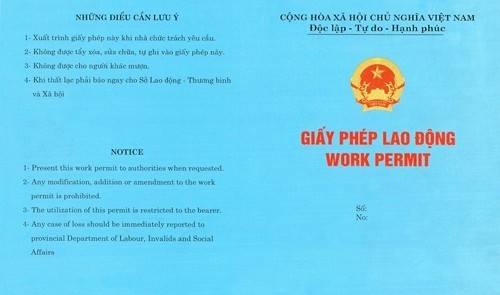
A Vietnam work permit is the legal authorization for a foreign national to work in Vietnam in most employment scenarios. It is not the same as a visa, and it is not the same as a residence card. In compliance terms, a visa answers “can you enter Vietnam?”, while a work permit Vietnam answers “can you work legally in Vietnam?”.
If the foreigner is working in Vietnam without a valid work permit (or without a valid exemption confirmation where required), both the worker and the employer can face penalties, and the worker can face removal from Vietnam.
2) Work permit Vietnam vs Visa vs TRC (don’t confuse these)
Vietnam Visa (entry permission)
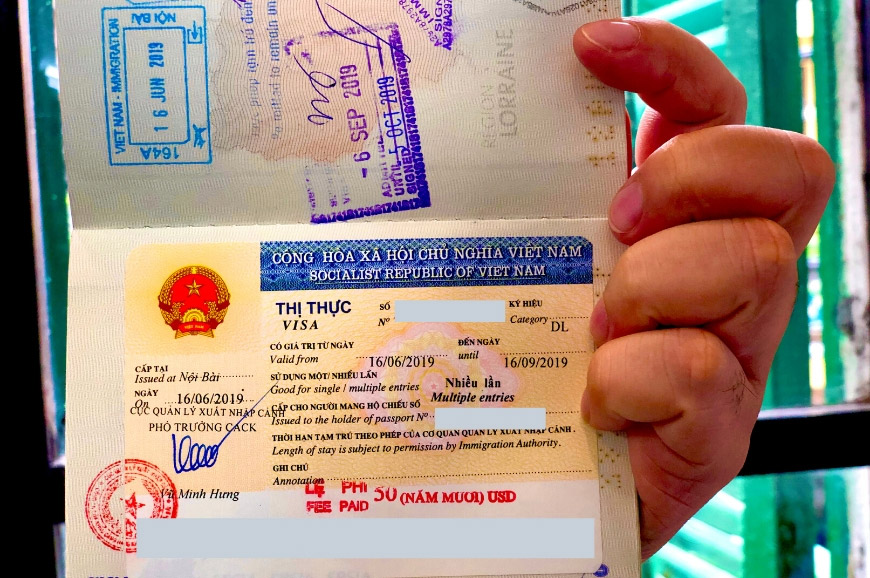
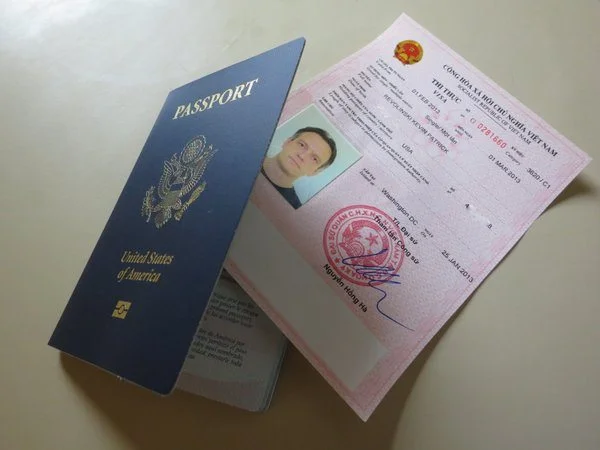
A visa typically allows entry and short-term stay under a certain purpose. Having a business visa does not automatically make employment legal.
Vietnam work permit (work authorization)
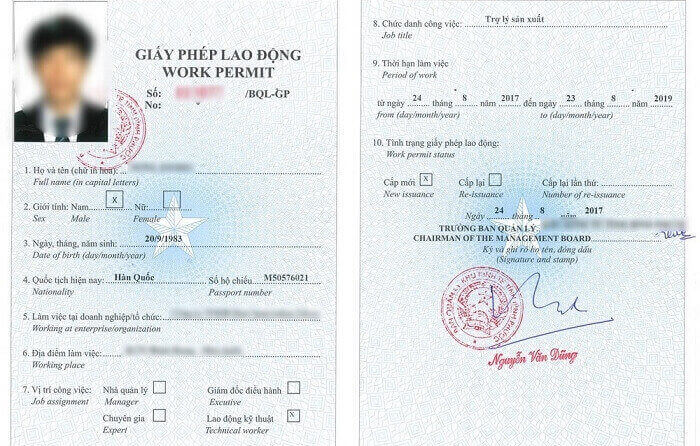
The work permit Vietnam is the primary document that legalizes employment (unless exempt).
Vietnam Temporary Residence Card (TRC)
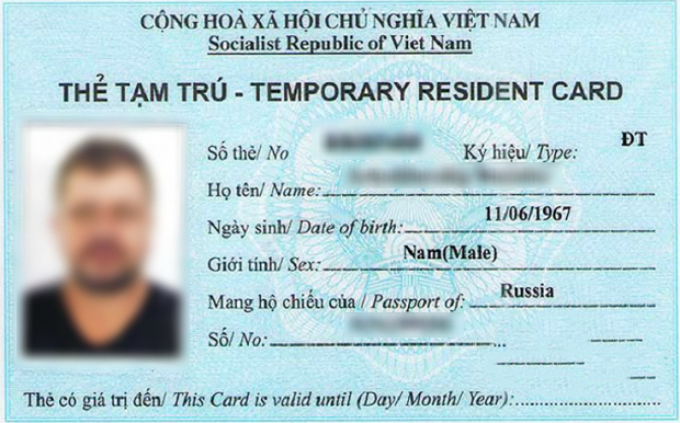
A TRC is a residence document that allows longer-term stay. In many cases, a TRC is pursued after a work permit Vietnam is issued, but the exact route can vary depending on immigration strategy and personal circumstances.
Practical takeaway: For HR and Legal teams, compliance is usually built around the work permit Vietnam or the exemption confirmation. Visa/TRC planning comes after (or runs parallel) to that compliance core.
3) Who needs a Vietnam work permit?
In most cases, foreign nationals working in Vietnam under an employer’s direction need a Vietnam work permit, unless they qualify for a specific exemption category.
A simple way to think about it:
- If the foreigner will perform work in Vietnam for a Vietnam-based entity (or for a foreign entity’s presence in Vietnam), assume “work permit Vietnam required” until proven exempt.
- If the foreigner will be paid (directly or indirectly) for work performed in Vietnam, compliance risk is higher, and you should treat the work permit Vietnam path as the default.
- If the foreigner will be in Vietnam only briefly for limited tasks, they might be exempt—but exemption still often requires an official confirmation or notification.
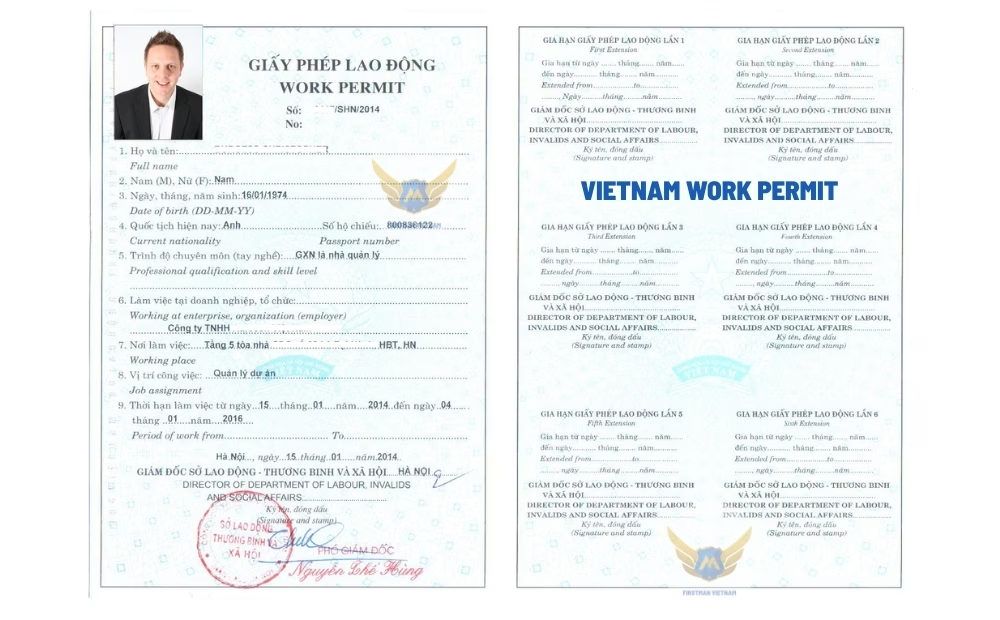
4) Work permit exemption Vietnam: “Exempt” doesn’t mean “no paperwork”
Vietnam provides exemption categories for certain foreign workers. But in practice, many exempt cases still require one of these:
- An official exemption confirmation/certificate, or
- A formal notification submitted by the employer before the foreigner starts working, depending on the exact exemption route.
Practical takeaway: When you hear “exempt,” ask two questions immediately:
- Exempt from work permit issuance — yes or no?
- Still required to obtain exemption confirmation/notification — yes or no?
If you skip the confirmation/notification step when it is required, you can still be treated as non-compliant.
5) Legal framework (2025–2026): what HR/Legal should cite
For internal SOPs and compliance files, your HR/Legal team usually wants to anchor decisions to:
- The Labor Code provisions on foreign workers in Vietnam
- The current Government decree implementing foreign labor in Vietnam (procedures, forms, timelines, validity)
- The administrative penalty decree covering violations and fine levels
- Local implementation guidance where relevant (because provincial practice can differ in document presentation details)
Important reality: Vietnam has national rules, but implementation details and required “presentation format” can vary between provinces/cities. That’s why a Vietnam work permit checklist that worked in one province may need slight adjustment in another.
6) Vietnam work permit job categories: Manager, Executive, Expert, Technical worker
For a work permit Vietnam application, it’s not enough to say “we need this person.” You must place the foreigner into a recognized job category and support that category with evidence.
The most common categories used in Vietnam work permit applications include:
6.1 Manager
Typically tied to enterprise management roles (leadership and management responsibilities).
Evidence usually needed: appointment/assignment, org chart, job description, sometimes proof of managerial authority.
6.2 Executive Director (or head of a unit)
Often linked to the person leading and operating a branch, representative office, or business location.
Evidence: appointment letter, branch/RO registration documents, job description, authority scope.
6.3 Expert
Often the most used category for professional hires (IT, finance, engineering, specialized operations).
Evidence: degree/diploma + experience letters aligned to the job and category.
6.4 Technical worker
Often used for skilled technicians, specialized operators, or roles proven by training plus experience.
Evidence: technical training + experience letters, sometimes additional certifications.
Why this matters: A large portion of rejected work permit Vietnam dossiers fail because the documents do not clearly prove the chosen category. The work permit Vietnam is not only about personal identity—it’s about category eligibility.
7) Vietnam work permit requirements (employer side)
For employers, Vietnam work permit compliance is typically built around three pillars:
7.1 Legitimate employing entity
The company must be legally established and properly registered.
7.2 Job role justification and compliance structure
The job position, job description, and location must match the dossier and the expected employment arrangement.
Common HR pitfall: job title and job description are inconsistent across documents.
7.3 Workforce planning / demand approval step (when applicable)
Some cases require the employer to explain why the role needs a foreign worker before the work permit Vietnam is issued. In many real workflows, the employer prepares a written explanation as part of the dossier plan.
Practical tip: Treat job description drafting as a compliance document. Don’t use a generic job description copied from another country. Align it to the Vietnam work permit category and to the actual work duties in Vietnam.
8) Vietnam work permit requirements (foreign worker side)
Most Vietnam work permit applications require evidence across these areas:
8.1 Identity documents
- Passport (valid, consistent data across dossier)
- Photos (format requirements can vary; follow the local authority’s current practice)
8.2 Medical check up for Vietnam work permit
A medical examination report is often required, typically within a validity window (commonly “recent” within months).
Practical tip: Ask in advance which medical facilities/forms are recognized locally and whether the report must be from Vietnam or can be from abroad (rules and local practice can matter).
8.3 Criminal record / judicial record
Criminal record requirements are common in Vietnam work permit dossiers.
Timing reality: This is a major delay point for global hires because some countries take weeks to issue it.
8.4 Qualification and experience
This is where many global applicants struggle. Vietnam work permit eligibility often expects:
- Education credentials aligned to the job; and/or
- Professional experience letters proving the required duration and relevance; and/or
- Training records for technical worker routes
Practical tip: Experience letters should be explicit: role title, duties, dates, and confirmation of relevant work. Generic “To whom it may concern” letters with no detail cause rejections.
8.5 Legalization, translation, certification
If documents are issued outside Vietnam, they often must be:
- Consular legalized (unless exempt by treaty/reciprocity)
- Translated into Vietnamese
- Certified/notarized according to Vietnam standards
This is the #1 timeline trap for a work permit Vietnam project, especially for global hires.
9) How to get Vietnam work permit – Processing step-by-step (A–Z)
Below is a clean workflow you can adopt as an internal SOP.
Step 1 — Decide route: Vietnam work permit or exemption
Start with a legal assessment:
- Does the case clearly fit a work permit exemption category?
- If exempt, does the employer still need exemption confirmation/notification?
Output of Step 1: a “route decision memo” that HR/Legal can keep for audit.
Step 2 — Build a timeline backward from the intended start date
A safe planning model for global hires:
- Start planning 6–10 weeks before the intended start date (or more if criminal record/legalization is slow).
- Aim to submit the work permit Vietnam dossier well before “last-minute” windows.
Step 3 — Collect documents in two streams
Stream A: From abroad
- Degree/diploma + transcripts (if required by local practice)
- Experience letters
- Criminal record
- Any specialist certificates
- Passport copies
- Legalization preparation
Stream B: From Vietnam
- Employer documents
- Job description and category mapping
- Medical exam (if conducted in Vietnam)
- Local forms, submission preparation
Step 4 — Legalization + translation + certification
This is often the longest step.
Practical controls to reduce delays:
- Use a legalization checklist per country
- Ensure names and passport numbers match across all documents
- Translate after legalization (so translators work on the legalized version)
- Keep clear scanned copies for the submission portal or local authority
Step 5 — Submission to the competent authority
Submission may be online, offline, or hybrid depending on locality and system availability.
HR best practice: Keep a “submission evidence pack” including:
- Filing receipt
- Dossier index
- Copies of key documents
- The final approved job description and category mapping
Step 6 — Clarifications and supplement requests (if any)
Authorities may request clarification or additional evidence.
Practical tip: Build your dossier in a way that minimizes follow-ups:
- Make category evidence unmistakable
- Present the dossier in a structured order
- Provide a summary sheet with a document map
Step 7 — Receive the Vietnam work permit
When you receive the work permit Vietnam, check:
- Full name spelling
- Passport number
- Employer name and address
- Job title/category
- Work location(s)
- Validity dates
Do not skip this check. Errors can create immigration issues later.
Step 8 — Post-issuance compliance and next steps
After the work permit Vietnam is issued, typical actions include:
- Finalizing the labor contract or assignment documentation properly
- Maintaining compliance documentation for inspection
- Planning TRC or long-term stay route (if needed)
- Setting reminders for renewal/extension timing and possible re-issuance triggers (passport change, role change, location change)
10) Vietnam work permit documents checklist (copy-ready)
Below is a practical work permit Vietnam checklist split into employer vs foreign worker.
10.1 Employer checklist (company-side)
- Company legal registration documents (as required locally)
- Company introduction and contact details for dossier
- Role and job description aligned to the chosen category (Manager/Executive/Expert/Technical worker)
- Work location details (single province vs multiple provinces)
- Internal approval memo (recommended) — why this hire is needed and how compliance will be maintained
- Application forms required by the current decree/local authority
- Proof of submission authority/authorization letter for the filer (if someone files on the company’s behalf)
- Dossier index sheet (highly recommended to reduce supplement requests)
10.2 Foreign worker checklist (personal/professional)
- Passport (copy; full data page, and additional pages if required)
- Photos (as required by local practice)
- Medical examination report (within validity window)
- Criminal record / judicial record (within validity window)
- Degree/diploma (and sometimes transcripts)
- Experience confirmation letters proving role relevance and duration
- Professional certificates (if relevant)
- Legalization documents (if applicable)
- Vietnamese translations + certification/notarization
10.3 Special scenario checklists (common add-ons)
Multiple work locations:
- Additional work location documentation and plan, depending on authority requirements.
Intra-company transfer:
- Proof of employment history in the overseas parent entity and transfer letter.
Short-term assignments:
- Proof of duration and exemption route (if used), plus notification/confirmation steps.
Passport renewal during processing:
- Plan for re-issuance or document consistency updates.
11) Timeline: how long does a work permit Vietnam take (real-world)?
A practical, global-facing timeline looks like this:
Best-case timeline (well-prepared, fast document issuance)
- Criminal record available quickly
- Degree and experience letters ready
- Legalization/translation handled smoothly
- Minimal clarifications required
Typical result: several weeks from planning start to permit receipt.
Typical timeline (most global hires)
- Criminal record takes 1–4+ weeks depending on country
- Legalization adds additional weeks depending on embassy/consulate processing
- Translation and certification add days to a week
- Authority processing is usually faster if dossier is complete
Typical result: 6–10 weeks total planning time is not unusual.
Worst-case timeline (avoid this)
- Documents mismatch (names, dates, job titles)
- Experience letters not accepted and must be re-issued
- Legalization must be redone
- Filing is too close to the start date and triggers urgent rework
Typical result: repeated cycles and delayed start date.
Key HR insight: The authority’s processing time may be the shortest part. The longest part is usually preparing compliant documents.
12) Vietnam work permit costs: what to budget (and what people forget)
12.1 Government fees
Government fees for a work permit Vietnam often vary by locality. The state fee is usually only a small part of the total project cost.
12.2 Hidden / overlooked costs
Global hires often face:
- Criminal record issuance fee + courier
- Consular legalization fees
- Translation and certification fees
- Medical examination fee
- Internal HR/Legal coordination time
- Potential rework costs if documents are rejected
12.3 Service provider fees (if outsourcing)
Service provider costs vary based on scope:
- “Document review only” (you file yourself)
- “Full service” (end-to-end)
- “Urgent/complex case” (multi-province, tight timeline, unusual category)
Budgeting rule: Pay for clarity and compliance, not promises. Any provider who says “guaranteed approval” without reviewing documents carefully is a red flag.
If you need any support in processing work permit in Vietnam, please feel free to fill out this for for free consulting:
13) Renewal/extension, re-issuance, and changes after issuance of Work Permit in Vietnam
13.1 Validity
Vietnam work permits typically have a maximum validity period (commonly capped). Plan renewals early.
13.2 Extension vs re-issuance
- Extension/renewal applies when continuing a similar employment arrangement
- Re-issuance applies when the permit is lost/damaged or when certain key data changes (passport number, role, employer details, etc.)
13.3 Common change triggers HR should track
- Passport renewal/replacement
- Job title change
- Job category change (expert → manager, etc.)
- Work location change (new province/city)
- Employer restructuring
Practical HR control: Maintain a “work permit Vietnam register” with:
- Worker name, passport, role, category
- Permit number, issue date, expiry date
- Work location(s)
- Reminder dates (90/60/30 days pre-expiry)
14) Comparison table: Vietnam work permit vs exemption confirmation
| Topic | Vietnam Work Permit | Work Permit Exemption (Confirmation/Notification) |
|---|---|---|
| Purpose | Legal authorization to work | Recognizes that the worker may work without a permit under an exemption |
| Who uses it | Most foreign employees | Foreign workers who meet exemption conditions |
| Output document | Work permit | Exemption confirmation/certificate, or required notification depending on case |
| Evidence focus | Category + qualifications + compliance dossier | Exemption eligibility evidence + confirmation steps |
| HR risk if skipped | Non-compliance, penalties, potential removal | Similar compliance risk if confirmation/notification is required but not done |
| Best use case | Standard hires and long-term roles | Certain short-term or special status roles (as defined by law) |
15) Common reasons Vietnam work permit dossiers get rejected (and fixes)
Reason 1: Category evidence is weak
Fix: Align experience letters and job description with the category definition. Make dates and duties explicit.
Reason 2: Documents are not properly legalized/translated
Fix: Confirm legalization requirements per country and do translation/certification correctly.
Reason 3: Inconsistent information across documents
Fix: Standardize spelling, naming order, passport numbers, dates. Use a dossier consistency checklist.
Reason 4: Job title and job description mismatch
Fix: Build a “job description master” and reuse consistently across forms and supporting letters.
Reason 5: Timeline planning is too tight
Fix: Start earlier and set internal deadlines, especially for criminal record and legalization.
16) How to choose a reliable Vietnam work permit service agency?
If you’re hiring a unit to help with a work permit Vietnam, use this due diligence list:
Green flags
- They start with a route assessment (permit vs exemption)
- They provide a written checklist and a timeline tailored to your worker’s country
- They explain legalization and translation clearly
- They separate government fees vs service fees transparently
- They offer a “rejection prevention” approach: category mapping, document consistency review
Red flags
- “Guaranteed approval” promises
- Opaque pricing (“all-in” but no itemization)
- They cannot explain legalization
- They ask you to create or alter documents in questionable ways
- They rush filing without a full dossier review
17) Contact Reliable Vietnam Work Permit Agency
Firstman can support your Vietnam work permit project as a compliance-focused partner—especially if your HR/Legal team wants a guided, audit-friendly process rather than guesswork.
Contact (CTA):
- Call / WhatsApp: +84944578111
- Email: admin@firstman.vn
- Website: https://firstman.asia
- Action: Fill in the consultation form (on the Firstman website) or contact the team directly via hotline/WhatsApp/email.
(For internal linking on your site: add a link to your About Us page inside your WordPress editor, but this article intentionally contains no links except the References section.)
19) FAQ — Vietnam work permit (reader-friendly)
1) Do I need a Vietnam work permit if I have a business visa?
In most cases, yes. A visa allows entry; a Vietnam work permit (or a valid exemption confirmation) legalizes the right to work.
2) How long does a work permit Vietnam take?
Authority processing can be fast once the dossier is complete, but global timelines are often driven by criminal record, legalization, and translations. Plan weeks, not days, unless your documents are already prepared.
3) What documents cause the biggest delays?
Criminal record/judicial record, legalization of foreign-issued documents, and experience letters that don’t clearly prove the role category.
4) What’s the most common reason applications fail?
Weak category evidence: job description and experience letters don’t match the legal category (expert/technical/manager/executive) cleanly.
5) Is there a “Vietnam work permit exemption”?
Yes, but exemption often still requires formal confirmation/notification steps. “Exempt” does not always mean “no paperwork.”
6) What should HR do after getting the Vietnam work permit?
Verify all data, keep compliance copies, and set a renewal/re-issuance reminder system. Track changes like passport renewal or job location changes.
References & Official Sources about Work Permit in Vietnam
The information in this article is compiled based on Vietnam’s official legal framework, government publications, and internationally recognized labor standards. While this guide is written in practical, easy-to-understand language, readers are encouraged to consult the official sources below for full legal texts and updates.
Vietnam Government & Legal Sources to read more about work permit in Vietnam
- Vietnam Government Portal: https://vietnam.gov.vn
- LuatVietnam (English version) – Legal updates and summaries on Vietnam work permits for foreign workers
https://english.luatvietnam.vn/legal-updates/new-regulations-on-work-permits-for-foreign-workers-in-vietnam-892-103450-article.html - Vietnam Government Portal – Official legal documents, decrees, and resolutions
https://vanban.chinhphu.vn/ - Ministry of Home Affairs – Authority responsible for foreign labor management
https://www.moha.gov.vn/ - National Public Service Portal of Vietnam – Administrative procedures related to work permits and labor compliance
https://dichvucong.gov.vn/
International & Comparative References
- International Labour Organization (ILO) – International labor standards and foreign employment principles
https://www.ilo.org/
Important Disclaimer
This article is provided for general informational purposes only and does not constitute legal advice.
Work permit requirements, exemption conditions, and procedures may vary depending on the foreign worker’s nationality, job category, location of work, and the latest regulatory updates. Employers and foreign professionals should always verify the applicable rules with competent authorities or qualified compliance advisors before implementation.